
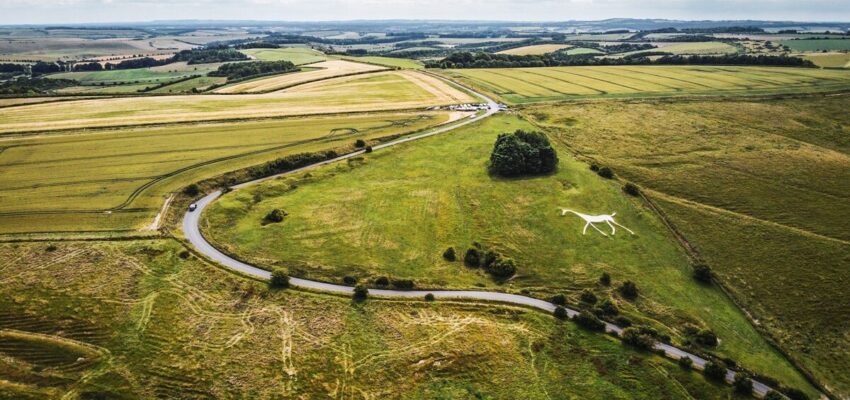
Some races are all about the finish time. Others are all about the scenery. Race to the Stones is one of the rare events that delivers both and takes you on an incredible journey to get there.
Spanning 100km along the ancient Ridgeway, this iconic ultramarathon takes runners on a journey through rolling chalk downs, prehistoric landscapes and some of Britain’s most remarkable historic sites before culminating at the magnificent Avebury Standing Stones, a UNESCO World Heritage Site that has stood for over 5,000 years.
Whether you’re chasing a personal best, stepping up to your first ultra or furthest distance, or if you’re simply looking for a challenge unlike any other, Race to the Stones offers an experience that deserves a place on every trail runner’s bucket list.
Running Through 5,000 Years of History
The Ridgeway is often described as Britain’s oldest road. Long before modern highways, it served as a vital trading and travelling route, following high ground across southern England and allowing people to move across the landscape while avoiding dense forests and marshlands below.
Today, runners taking on Race to the Stones get the unique opportunity to follow in those ancient footsteps on a journey of their own.
Unlike many endurance events where the miles blur together, every section of the Race to the Stones course feels connected to the history beneath your feet. From prehistoric earthworks and burial chambers to Iron Age hill forts and ancient monuments, the Ridgeway is a living museum stretching across the British countryside.
A Fast and Runnable 100km Ultra
While the history is captivating, make no mistake, this is still one of the UK’s most iconic ultramarathons and one where you can chase some serious ultra PBs.

The full route covers 100km with approximately 1,350m of elevation gain, taking runners from Lewknor in Oxfordshire to Avebury in Wiltshire. Despite the distance, the course is widely regarded as one of the most runnable 100km races in Britain thanks to its smooth trails, gentle gradients and wide-open terrain.
The challenge isn’t tackling brutal mountain climbs or technical descents. Instead, it’s maintaining your rhythm over an entire day on the trails. Long stretches of chalk tracks, rolling ridgelines and open countryside allow runners to settle into a steady flow, making it equally appealing to experienced ultrarunners and those taking on the distance for the first time.
Not Ready for the Full 100km? Choose Your Adventure
One of the things that makes Race to the Stones so special is that you don’t have to take on the full 100km non-stop challenge to experience the magic of the Ridgeway. Alongside the flagship ultra, runners and walkers can choose from three other options, each offering a unique way to experience Britain’s oldest road.
The Thames Valley 50km (Day One) covers the first half of the route, taking participants from Lewknor to the event’s halfway basecamp at Lattin Down. You’ll enjoy the early Chiltern scenery, cross the River Thames at Goring, and finish with a rewarding climb to basecamp, making it an ideal introduction to ultrarunning.
The Ridgeline 50km (Day Two) showcases arguably the most iconic stretch of the Ridgeway. Starting at Lattin Down and finishing at the Avebury Standing Stones, this route takes in open chalk downs, the legendary Uffington White Horse, ancient monuments and the spectacular landscapes of the North Wessex Downs. With less climbing and plenty of runnable terrain, it’s a popular choice for first-time 50km runners.
For those seeking the full journey with less time pressure, the 100km Over Two Days option offers the best of both worlds. Participants complete the same legendary route as the non-stop runners but split the challenge across a weekend, spending the night at the vibrant Lattin Down basecamp before returning to the trails on Sunday to complete the second half. It’s a fantastic stepping stone to a future 100km non-stop ultra and allows you to fully soak up the atmosphere, scenery and history of the Ridgeway at a more relaxed pace.
The Key Milestones Along the Ridgeway
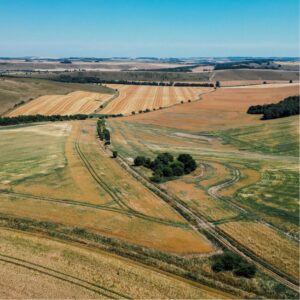
Grim’s Ditch
One of the first major historic landmarks is Grim’s Ditch, a mysterious prehistoric earthwork that stretches arrow-straight across the landscape. Thousands of years after its construction, its true purpose remains uncertain, adding a sense of wonder to the route.
Crossing the River Thames
Around the halfway point, runners cross the River Thames at Goring, marking both a geographical and psychological milestone. The crossing provides a memorable contrast to the hills and ridgelines that define much of the course and signals the start of the second half of the challenge.
Wayland’s Smithy
Hidden amongst the trees sits Wayland’s Smithy, a Neolithic burial chamber dating back thousands of years. It is one of the most atmospheric sections of the entire route and a reminder that you’re travelling through landscapes steeped in ancient mythology and history.
The Iconic Uffington White Horse
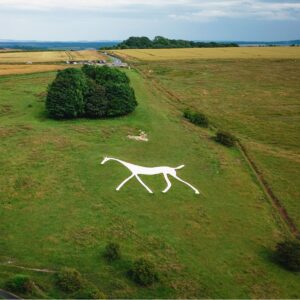
For many runners, the highlight of the route comes with the approach to the Uffington White Horse.
Carved into the chalk hillside nearly 3,000 years ago, this enormous prehistoric figure dominates the landscape and serves as one of the most recognisable landmarks on the Ridgeway. Together with the surrounding Iron Age hill forts, it creates one of the most spectacular viewpoints on the course.
Barbury Castle
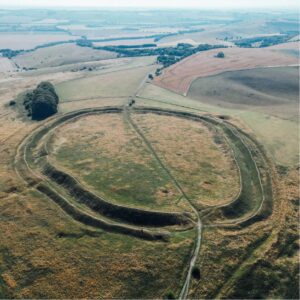
One of the final historic highlights on the route, Barbury Castle is a spectacular Iron Age hill fort perched high above the Wiltshire downs. Its ancient ramparts offer sweeping views across the landscape and a reminder that people have travelled this Ridgeway route for thousands of years. It’s the perfect place to pause, take in the scenery, and appreciate the history beneath your feet.
The Finish at Avebury Standing Stones
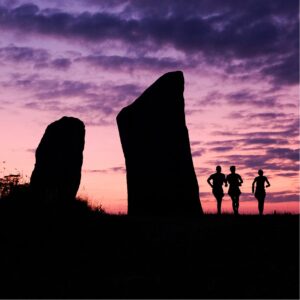
Few races anywhere in the world can match the finish line experience at Race to the Stones.
After 50km or 100km on the Ridgeway, participants arrive at the ancient stone circle of Avebury Standing Stones. Older than Stonehenge and among the most important prehistoric monuments in Europe, it provides a truly unforgettable setting for the final steps of your journey.
Crossing the finish line here feels like more than completing a race. It feels like completing a pilgrimage through history.
Built for First-Timers, Fast Enough for the Elite
 The Ridgeway’s runnable nature has made Race to the Stones as great for tackling your first ultra as it is for testing speed over the ultra distance as it boasts to be one of the fastest trail 100kms in the country.
The current men’s course record is held by Hugh Tibbs, who ran an astonishing 7:41:56 in 2025. The women’s course record of 9:14:17, set by Sarah Morwood in 2015, remains one of the standout performances in the race’s history.
To reward exceptional performances, Race to the Stones offers a dedicated course record prize fund. For 2027, a runner breaking the men’s record earns £2,000, while breaking the women’s long-standing benchmark is worth £3,000, with the prize increasing if the records remain unbroken.
But while the front of the field may be racing for records, most participants are there for something different.
They’re there to watch the sun rise over ancient trails, to experience the camaraderie of the ultra-running community, and to challenge themselves on one of Britain’s most historic long-distance paths.
Why Every Trail Runner Should Experience It
There are plenty of beautiful ultras. There are plenty of historic walking routes. There are even plenty of fast trail races.
Very few combine all three.
Race to the Stones is an opportunity to run a genuinely achievable 100km ultra while travelling through 5,000 years of British history. One moment you’re passing prehistoric monuments, the next you’re striding across open chalk downs with panoramic views stretching for miles. Hours later, you’re finishing amongst stones that have stood since long before written history began.
That’s what makes running the Ridgeway so special.
It’s not just a race against the clock. It’s a journey through one of the oldest and most fascinating landscapes in Britain.
The trail has endured for 5,000 years. All you need to do is make it to the stones.